

Move OneDrive to your own bucket


OneDrive is a fine desk drawer. It is a worse vault. Docs, PDFs, and old folders should live in a bucket you own if you want them to outlast a Microsoft 365 plan.
This post is the move for OneDrive files. Not Google Drive. Not the photo library. Not Dropbox. Those belong in Move Google Drive to your own bucket, Move Google Photos to your own bucket, and Move Dropbox to your own bucket.
1. Export folders from onedrive.com
Log in at onedrive.com. Select the files or a folder. Click Download.
Folders download as a .zip. That is the official path. There is no Google-style Takeout. There isn't one.
The official cap is 250 GB and 10,000 files. Nested files still count. If the download is mostly zips or mp4s, Microsoft also caps 10 GB per compressed file and 20 GB overall. Source is Microsoft download help.
A bigger library needs the OneDrive desktop app. Copy the folders off. Or download in batches.
OneNote notebooks do not come along. If a folder has one, the zip gets a .txt error instead. Files encrypted by a sensitivity label or IRM and over 4 MB are skipped. Download those one at a time.
You also cannot download files from the Shared view. Open the file and save a copy first.
Do not unpack this onto a laptop and call it done. The zips are the handoff. The bucket is the home.
2. Pick a bucket you own
You need S3-compatible object storage. Not another OneDrive clone.
For the price table, see the cheapest cloud object storage comparison.
This post does not walk the console again. If you do not have a bucket hooked up yet, follow how to connect a Backblaze B2 bucket and come back.
3. Import the zip in file.rocks
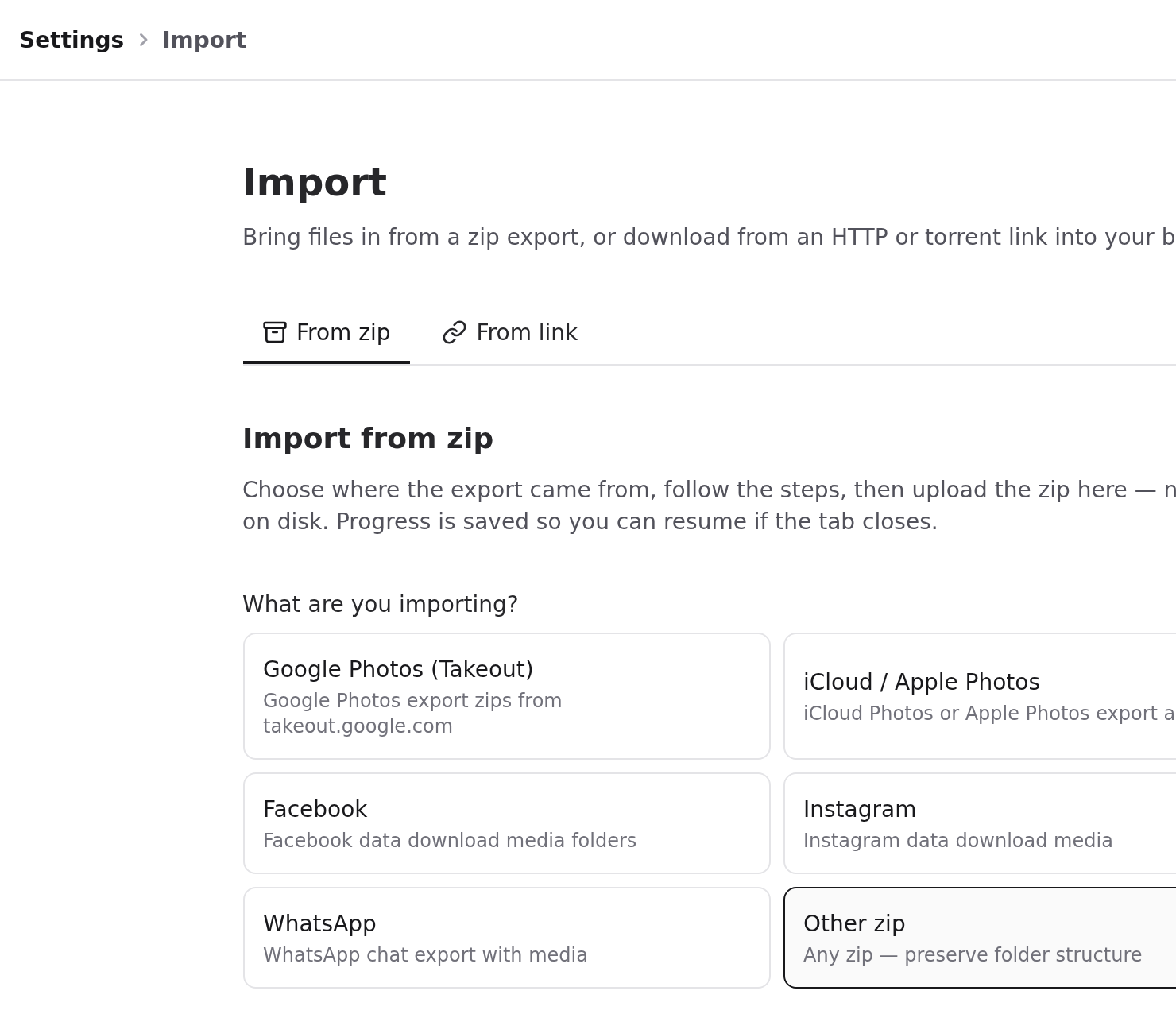
Sign in at file.rocks. Open Settings, then Import. Stay on From zip.
Pick Other zip. That is the generic zip path. The Google Photos (Takeout) tile is for the photo library, not OneDrive.
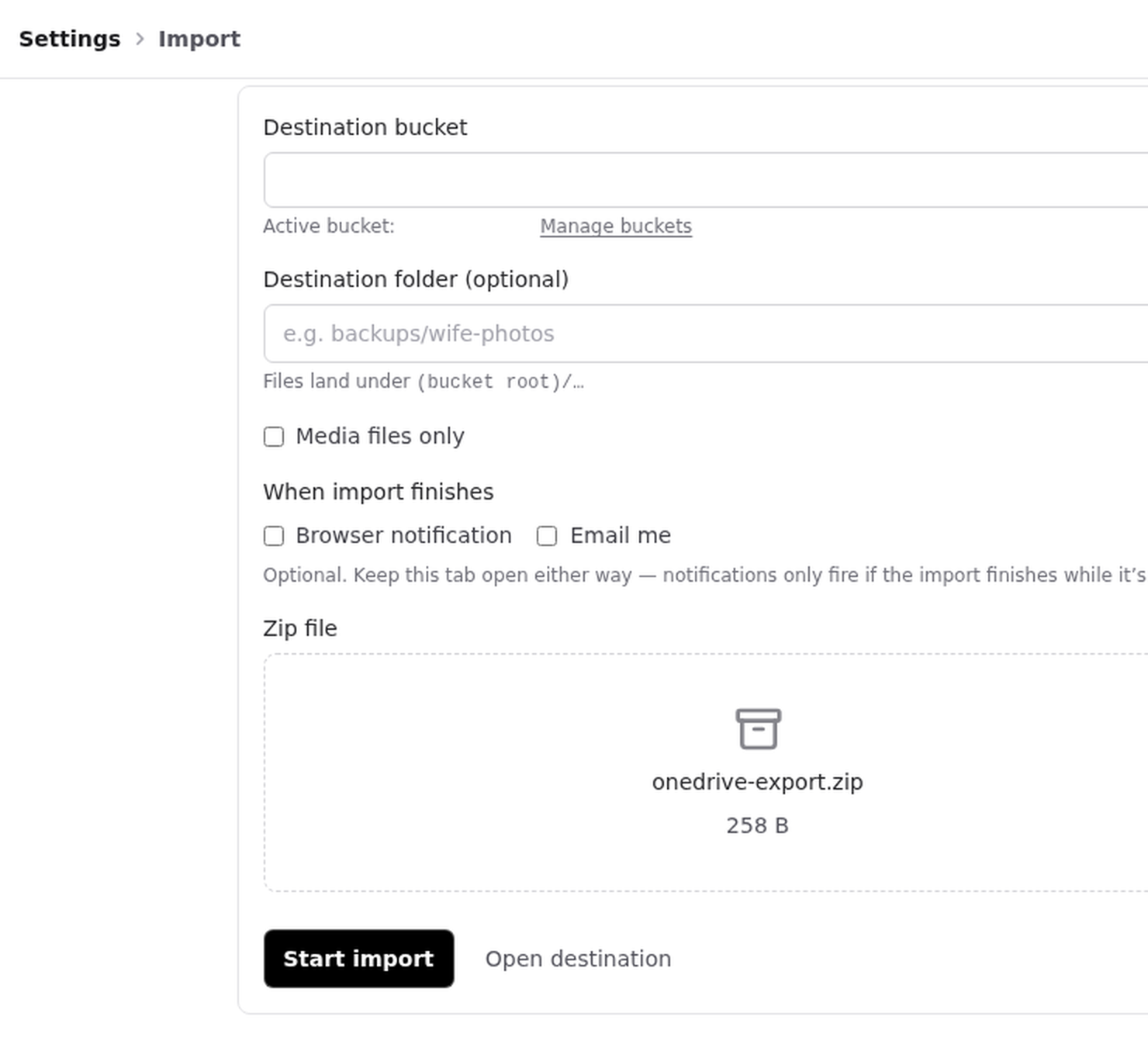
Turn Media files only off if you have docs. The box can start on. If it stays on, those files get skipped.
Drop the zip. Click Start import. file.rocks unpacks it into your bucket. You do not unzip it on your laptop.
Wait until it finishes. Open a few PDFs and docs and make sure they open.
You are not copying into file.rocks storage. file.rocks is the UI. The objects land in your bucket.
If you already unpacked the zip, drop the folders in Files instead. That is the fallback, not the main path.
4. What you lose
Be honest about this before you delete anything in OneDrive.
You lose live shared libraries. People you shared with in OneDrive will not keep a magic link into your new bucket. Send them files if they still need them.
You lose OneNote. Those notebooks are not in the zip.
You lose desktop sync. The OneDrive desktop app will not keep a folder on your laptop glued to this bucket. New files need a new habit: download again later, or import another zip through file.rocks.
You lose version history. The zip is the files as they are now.
You lose SharePoint team sites. Those are a different library. This post is personal OneDrive.
You keep the files. You own the bucket. You can leave file.rocks, or B2, and the objects still sit there.
5. Then stop
Do not rebuild OneDrive. Do not hunt for a live-share plugin on day one.
Open the files in file.rocks when you need a PDF. Keep the bucket paid.
Drive, Photos, and Dropbox are different exports. Use Move Google Drive to your own bucket, Move Google Photos to your own bucket, and Move Dropbox to your own bucket.
Need to send a file after it lands? That is how to share a file from your own bucket.
A direct download URL is a different path. Use import a file from a link or torrent. That is not the OneDrive path.